
Quick diagnosis
A louder-than-normal pump after the reservoir ran empty strongly suggests air or an inlet problem. Fill and reseat the tank, verify the outlet valve opens, and use only short attempts so the pump does not run dry.
What this symptom usually means
No water or coffee flow has four common branches: the machine is not drawing from the tank, the pump is airlocked, the outlet is blocked, or the control system has stopped the cycle. Pump sound is the fastest way to separate those branches.
Model-specific context: Remove any capsule before testing flow. If the model offers a rinse or cleaning cycle, use that rather than repeatedly trying to brew coffee.
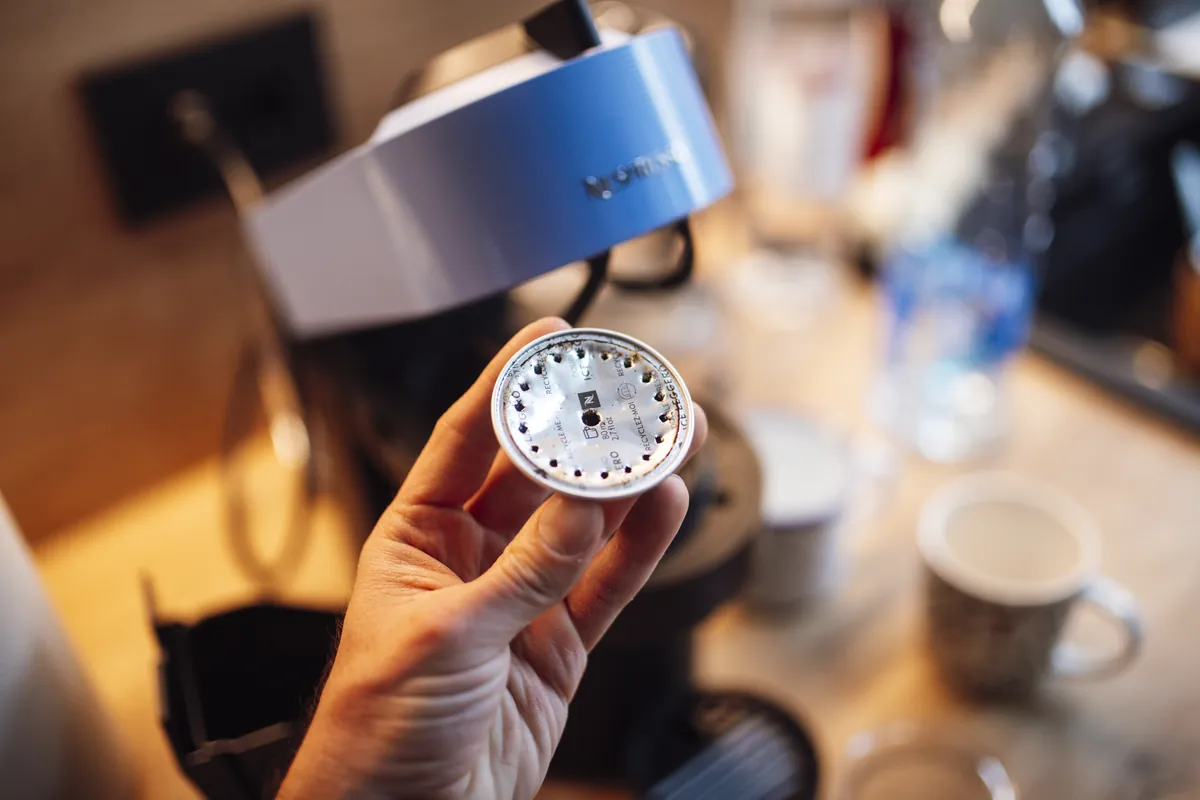
Clues to record before touching the machine
The fastest diagnosis comes from recording the machine's state before it is changed. Use your phone for a short video and write down whether the symptom occurs at startup, while heating, during grinding, after the pump starts, or during shutdown.
- Tank recently ran empty
- Pump sounds harsher
- No water during rinse either
- Remove coffee and run the shortest water-only cycle
- Listen for a steady pump, a pulsing pump, or silence
Most likely causes, in diagnostic order
The list below is ordered from common and externally testable conditions toward causes that may need qualified service. It is not a replacement for the error table or safety instructions for your exact model.
- Airlock at the inlet
- Tank is not depressing the valve
- Outlet is scaled
- Water tank valve is not opening
- Air entered the pump after the tank ran dry
- Needle, shower screen, or brew outlet is blocked
- Scale restricts a narrow internal passage
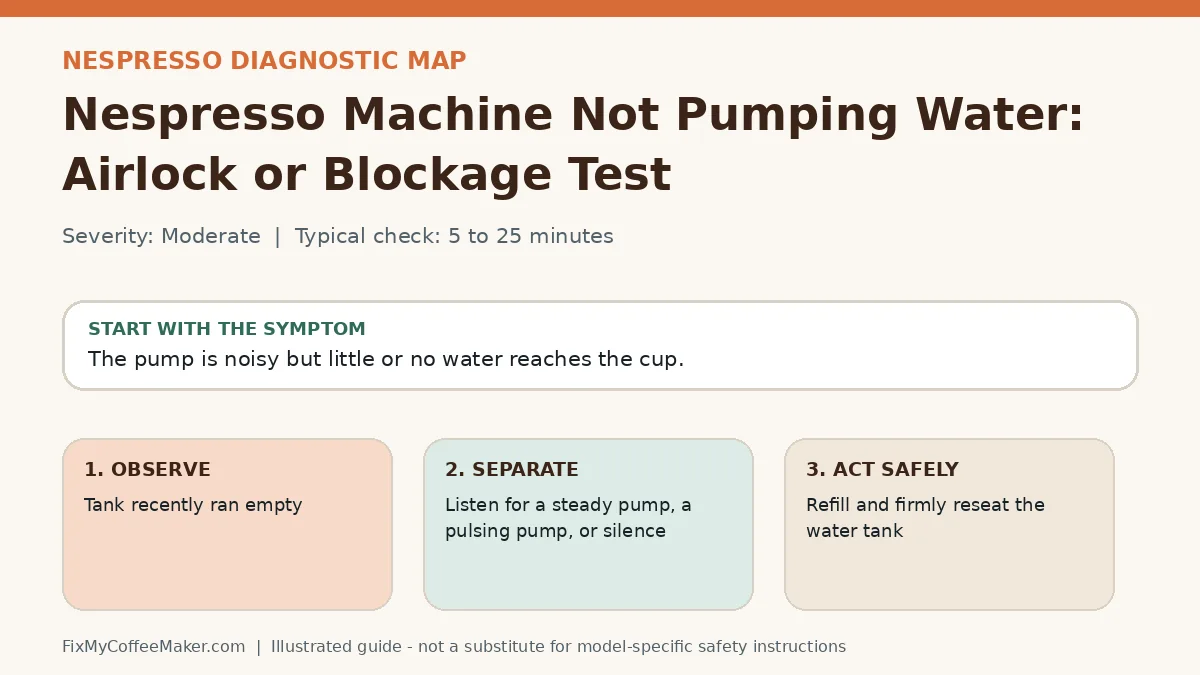
Owner-level observations and checks
Do not begin by replacing parts or repeating the full maintenance cycle. Complete these checks in order and stop if the machine behaves abnormally.
- Remove coffee and run the shortest water-only cycle
- Listen for a steady pump, a pulsing pump, or silence
- Press the tank down gently to test seating without forcing it
- Check whether hot water or steam works through a separate outlet
Illustrated video walkthrough
Original 8-second silent, captioned diagnostic animation. It is an illustrated decision guide, not footage of this exact machine.
Safe fixes, easiest first
- Refill and firmly reseat the water tank
- Open any hot-water control to help purge trapped air if the manual permits it
- Clean only user-removable needles, screens, or outlets
- Run two short water-only cycles with a pause between them
- Perform the approved descale process if flow is weak rather than completely absent
- Escalate if the pump is silent or the base leaks
How to interpret what happens next
Flow returns through all outlets: tank seating or an airlock was likely
Hot water works but coffee does not: focus on the brew outlet or capsule path
Pump is loud with no flow: stop prolonged dry running and check the inlet
Pump is silent while controls work: service may be required
Common misdiagnosis
A loud pump does not prove the pump is moving water. It often becomes louder when it is dry or pulling against a closed tank valve.
When to stop troubleshooting
Owner-level checks end when the next step would expose wiring, a heater, pressurized plumbing, sharp internal parts, or a sealed grinder. Stop and contact the manufacturer or a qualified appliance technician when any of these apply:
- Pump runs dry for more than 10 seconds
- The base becomes wet
- There is a hot electrical odor
- A non-removable internal blockage is suspected
Prevent the problem from returning
- Refill before the tank reaches empty
- Rinse removable outlets on schedule
- Descale based on hardness and use, not only calendar time
Sources and verification
This page paraphrases owner-level manufacturer guidance and adds an original symptom-first decision path. It does not reproduce a manual. Exact button sequences should always be checked against the model label and current official instructions.
- Nespresso machine assistance - official manufacturer information used to verify model terminology and owner-level procedures.
- Nespresso machine FAQ - official manufacturer information used to verify model terminology and owner-level procedures.
Editorial status: desk-researched against official support material; diagnostic media are original illustrations. We do not claim hands-on testing of this exact machine. See our evidence labels and report a correction.