
Quick diagnosis
Separate a no-start condition from a no-flow condition. If the head never spins and the pump is silent, focus on closure, power, and capsule detection. If the head spins and the pump runs, focus on tank seating, air, and a blocked outlet.
What this symptom usually means
A brew that starts and stops early can be caused by programmed volume, low water detection, restricted flow, a lid or adapter sensor, or thermal protection. Measure output and listen to the final seconds of the cycle.
Model-specific context: Begin with a known-good, undamaged capsule and enough water for the selected size. A water-only cleaning function can help isolate capsule recognition from flow.
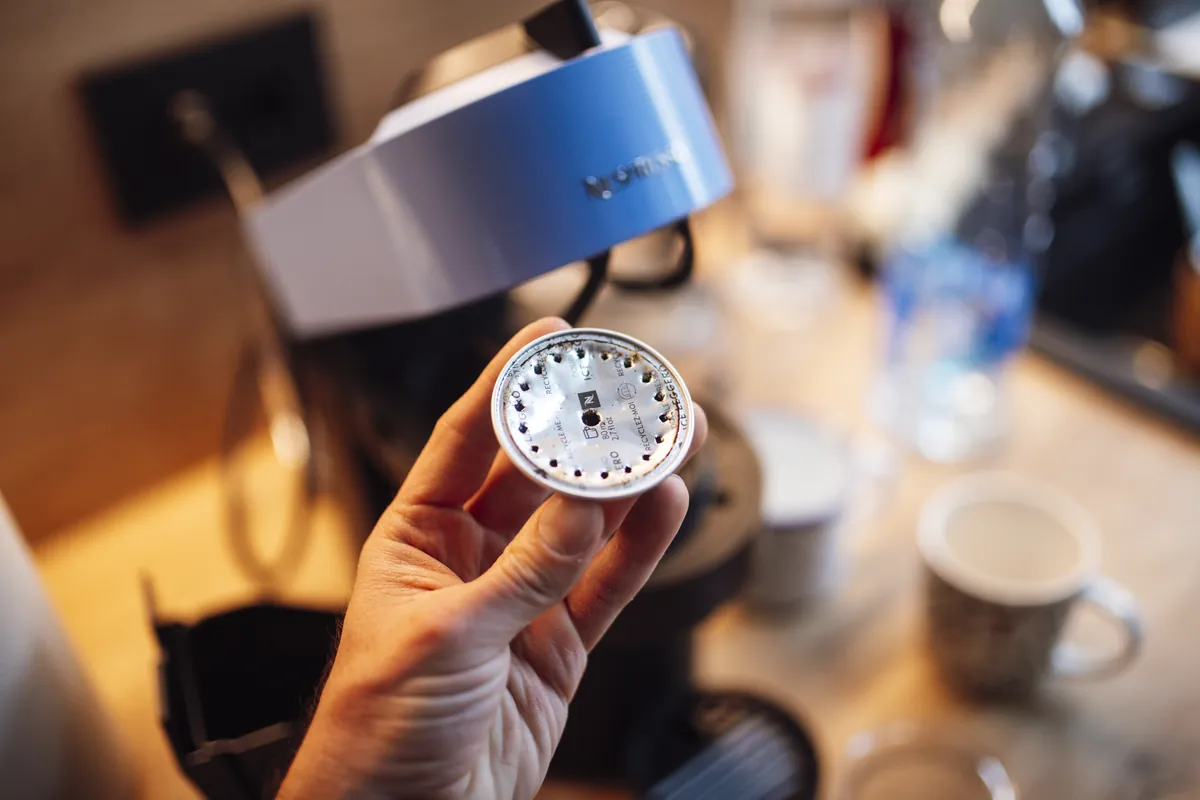
Clues to record before touching the machine
The fastest diagnosis comes from recording the machine's state before it is changed. Use your phone for a short video and write down whether the symptom occurs at startup, while heating, during grinding, after the pump starts, or during shutdown.
- No motor or pump sound
- Head spins but stops
- Button changes color after press
- Run a water-only brew into a measuring cup
- Choose a standard size rather than a saved favorite
Most likely causes, in diagnostic order
The list below is ordered from common and externally testable conditions toward causes that may need qualified service. It is not a replacement for the error table or safety instructions for your exact model.
- Head is not locked
- Capsule barcode cannot be read
- Tank valve is not opening
- Cup size was reprogrammed
- Water level or tank seating is marginal
- Needle or outlet is partly restricted
- Thermal protection or control fault stops the cycle
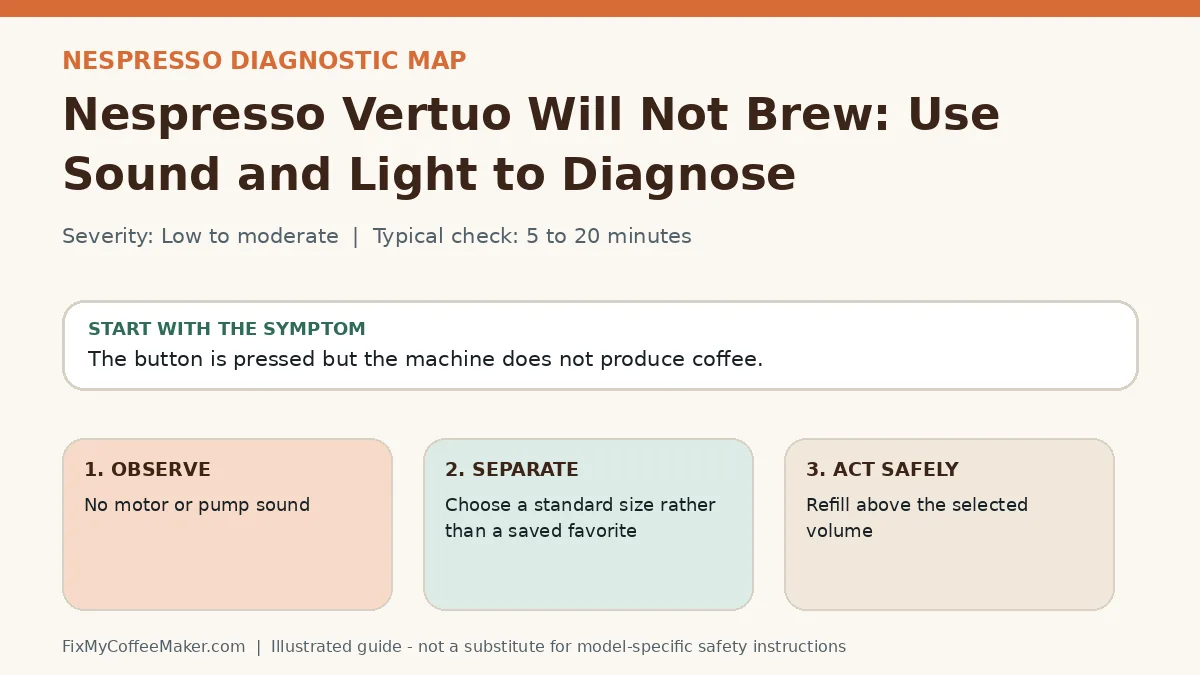
Owner-level observations and checks
Do not begin by replacing parts or repeating the full maintenance cycle. Complete these checks in order and stop if the machine behaves abnormally.
- Run a water-only brew into a measuring cup
- Choose a standard size rather than a saved favorite
- Reseat the tank and brew adapter
- Compare pump sound at the moment it stops
Illustrated video walkthrough
Original 8-second silent, captioned diagnostic animation. It is an illustrated decision guide, not footage of this exact machine.
Safe fixes, easiest first
- Refill above the selected volume
- Reset the cup-size programming if documented
- Clean user-accessible needles and outlets
- Remove any pod or grounds and retest
- Allow cooling between repeated tests
- Seek support if the stop point is identical after cleaning
How to interpret what happens next
Correct volume after reset: programming caused the symptom
Volume improves after cleaning: restriction was involved
Stops when hot but not cold: thermal protection is possible
Pump stops abruptly with error lights: record the pattern
Common misdiagnosis
A marked cup size is a target, not a laboratory volume; retained water and coffee absorption create small differences. Large, repeatable shortages deserve diagnosis.
When to stop troubleshooting
Owner-level checks end when the next step would expose wiring, a heater, pressurized plumbing, sharp internal parts, or a sealed grinder. Stop and contact the manufacturer or a qualified appliance technician when any of these apply:
- Machine overheats
- Pump strains with no output
- Leak develops
- Electrical protection trips
Prevent the problem from returning
- Use a water-only volume check monthly
- Keep needles and outlets clear
- Avoid running repeated empty cycles
Sources and verification
This page paraphrases owner-level manufacturer guidance and adds an original symptom-first decision path. It does not reproduce a manual. Exact button sequences should always be checked against the model label and current official instructions.
- Nespresso machine assistance - official manufacturer information used to verify model terminology and owner-level procedures.
Editorial status: desk-researched against official support material; diagnostic media are original illustrations. We do not claim hands-on testing of this exact machine. See our evidence labels and report a correction.