
Quick diagnosis
Do not force the head. Remove the capsule and used-capsule bin, inspect for a tilted capsule or residue, and test closure empty. Smooth empty closure but resistance with a capsule points to capsule format or alignment.
What this symptom usually means
A head that will not close, capsule that sticks, or capsule side that is not detected usually involves an incorrect capsule position, a full bin, coffee residue on the mechanism, or a sensor/interlock. Never force the lever or head.
Model-specific context: The puncture and barcode area can have sharp edges. Work only when unplugged and cool, and wipe accessible surfaces rather than reaching into the mechanism.
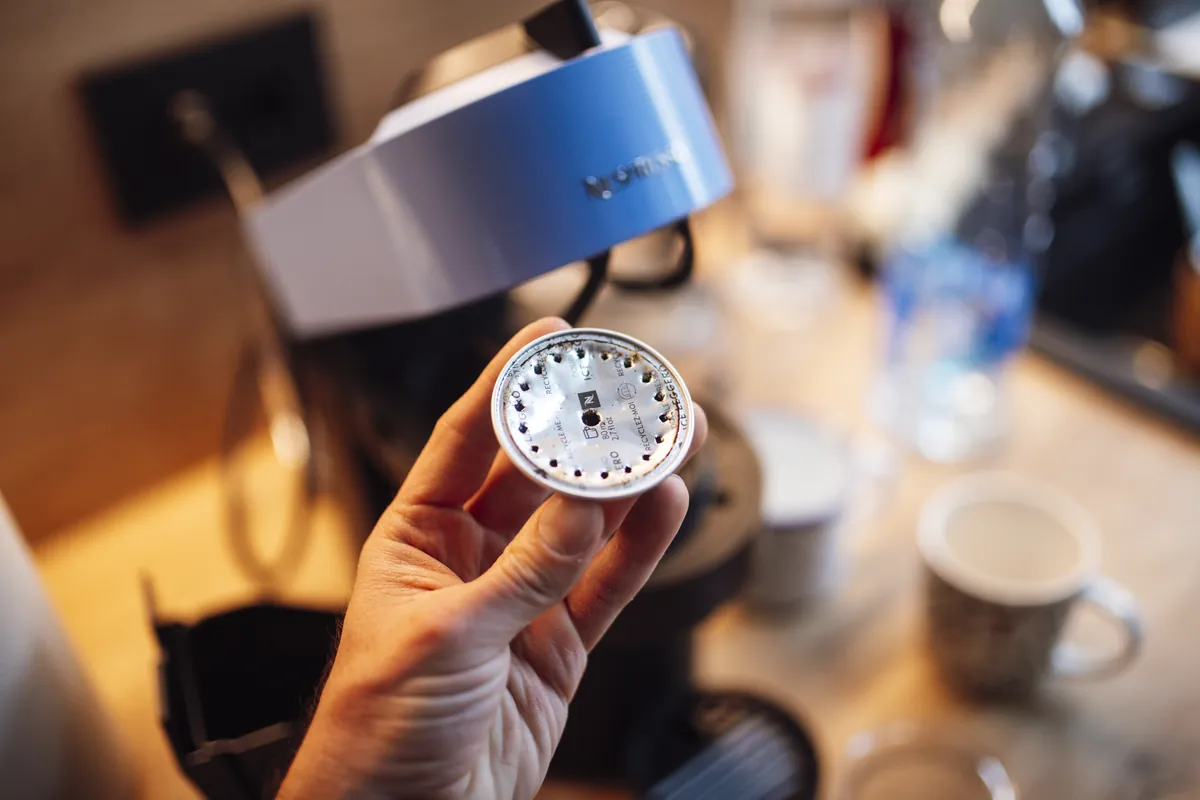
Clues to record before touching the machine
The fastest diagnosis comes from recording the machine's state before it is changed. Use your phone for a short video and write down whether the symptom occurs at startup, while heating, during grinding, after the pump starts, or during shutdown.
- A used capsule is visible below the chamber
- Lever stops at the same angle
- Closure works with no capsule
- Unplug and let the machine cool
- Remove the used-capsule bin
Most likely causes, in diagnostic order
The list below is ordered from common and externally testable conditions toward causes that may need qualified service. It is not a replacement for the error table or safety instructions for your exact model.
- Capsule is deformed
- Bin is overfilled
- Residue blocks the rim
- Capsule is tilted or deformed
- Used-capsule bin is full
- Residue blocks the capsule path
- Head or adapter interlock is not detected
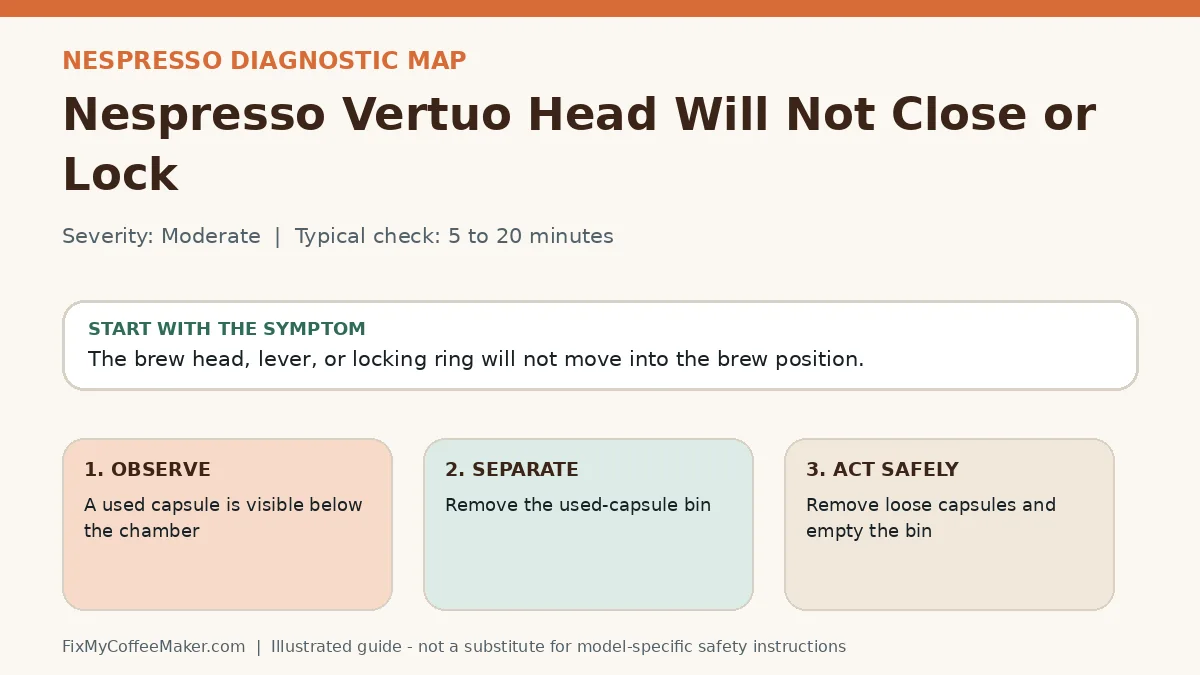
Owner-level observations and checks
Do not begin by replacing parts or repeating the full maintenance cycle. Complete these checks in order and stop if the machine behaves abnormally.
- Unplug and let the machine cool
- Remove the used-capsule bin
- Inspect the chamber with a flashlight
- Test closure with no capsule
Illustrated video walkthrough
Original 8-second silent, captioned diagnostic animation. It is an illustrated decision guide, not footage of this exact machine.
Safe fixes, easiest first
- Remove loose capsules and empty the bin
- Wipe accessible residue with a damp cloth
- Confirm the correct capsule format
- Reinstall adapters or holders fully
- Close gently with no capsule, then test one undamaged capsule
- Seek service if the mechanism binds
How to interpret what happens next
Closes empty but not with capsule: capsule type or alignment is the issue
Closes after bin removal: an overfilled bin blocked movement
Adapter is not recognized: clean and reseat its contact area
Mechanical resistance remains empty: service is needed
Common misdiagnosis
More force can bend a lever, pierce a capsule incorrectly, or damage an interlock. A normal mechanism should close with firm but smooth motion.
When to stop troubleshooting
Owner-level checks end when the next step would expose wiring, a heater, pressurized plumbing, sharp internal parts, or a sealed grinder. Stop and contact the manufacturer or a qualified appliance technician when any of these apply:
- Lever or head is visibly bent
- Sharp puncture parts are exposed
- Mechanism requires force
- Hot water or pressure is trapped
Prevent the problem from returning
- Use the correct capsule family
- Empty the used-capsule bin early
- Wipe the chamber after a burst or leaking capsule
Sources and verification
This page paraphrases owner-level manufacturer guidance and adds an original symptom-first decision path. It does not reproduce a manual. Exact button sequences should always be checked against the model label and current official instructions.
- Nespresso machine assistance - official manufacturer information used to verify model terminology and owner-level procedures.
Editorial status: desk-researched against official support material; diagnostic media are original illustrations. We do not claim hands-on testing of this exact machine. See our evidence labels and report a correction.