Quick diagnosis
High pressure with very slow flow normally means the puck is too restrictive. Clean the basket, confirm the dose, and move the grinder slightly coarser before suspecting the pump or gauge.
What this symptom usually means
Very high pressure with slow drips usually means the puck or basket is creating too much resistance. A grind that is too fine, excessive dose, blocked basket, or compacted screen is more common than a failed gauge.
Model-specific context: On an integrated-grinder machine, adjust grind in small steps and follow Breville's direction about whether the burrs should be moving during adjustment.
Clues to record before touching the machine
The fastest diagnosis comes from recording the machine's state before it is changed. Use your phone for a short video and write down whether the symptom occurs at startup, while heating, during grinding, after the pump starts, or during shutdown.
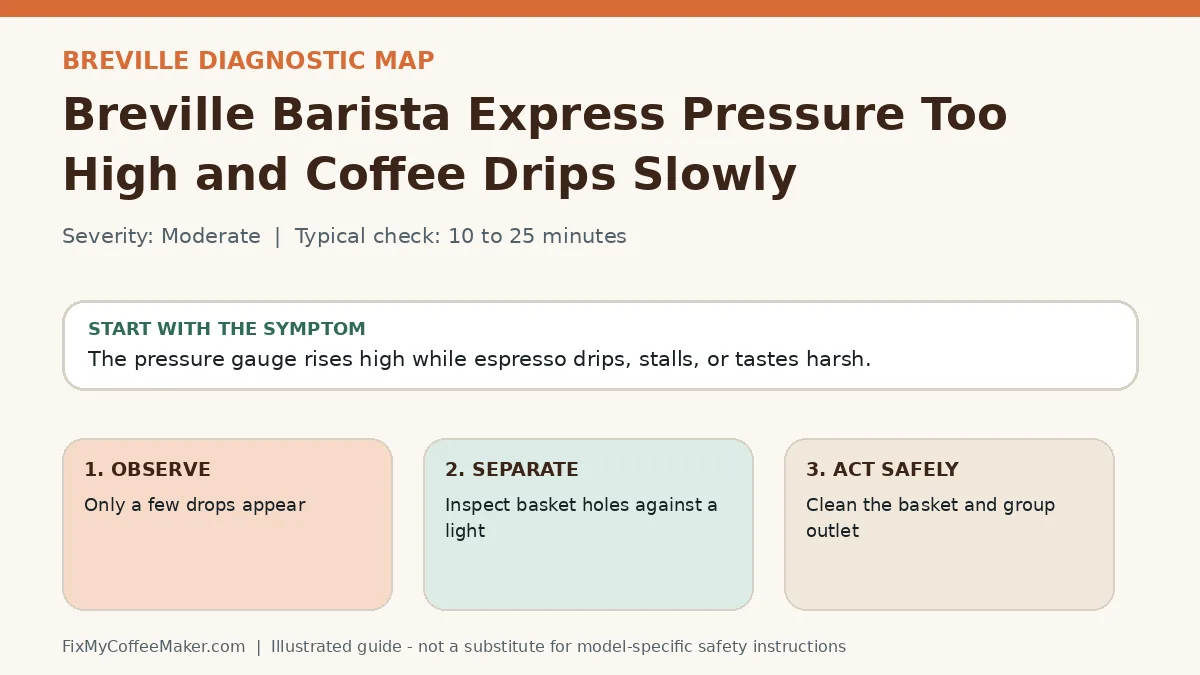
- Only a few drops appear
- Portafilter is difficult to lock
- Water-only flow looks normal
- Run a water-only shot without the portafilter
- Inspect basket holes against a light
Most likely causes, in diagnostic order
The list below is ordered from common and externally testable conditions toward causes that may need qualified service. It is not a replacement for the error table or safety instructions for your exact model.
- Dose is touching the shower screen
- Dual-wall basket is paired with an overly fine grind
- Grind is too fine
- Basket is overdosed
- Filter holes are blocked
- Coffee has swollen against the shower screen
Owner-level observations and checks
Do not begin by replacing parts or repeating the full maintenance cycle. Complete these checks in order and stop if the machine behaves abnormally.
- Run a water-only shot without the portafilter
- Inspect basket holes against a light
- Reduce the dose to the basket rating
- Move one grind step coarser and repeat
Illustrated video walkthrough
Original 8-second silent, captioned diagnostic animation. It is an illustrated decision guide, not footage of this exact machine.
Safe fixes, easiest first
- Clean the basket and group outlet
- Use the correct basket for the dose
- Adjust coarser in small steps
- Tamp level without excessive force
- Stop the shot if no liquid appears within a reasonable pre-infusion period
- Seek service if pressure remains abnormal with an empty approved test
How to interpret what happens next
Flow normal without coffee: puck resistance caused the symptom
Basket cleaning restores flow: blocked holes were involved
Pressure stays high with no portafilter: valve or gauge service may be needed
Portafilter is difficult to lock: reduce dose
Common misdiagnosis
Tamping harder is not a reliable way to tune pressure. Grind and dose normally have much larger effects.
When to stop troubleshooting
Owner-level checks end when the next step would expose wiring, a heater, pressurized plumbing, sharp internal parts, or a sealed grinder. Stop and contact the manufacturer or a qualified appliance technician when any of these apply:
- Portafilter sprays or shifts
- No liquid exits while the pump strains
- The group seal bulges or leaks
- Pressure is abnormal during a water-only test
Prevent the problem from returning
- Keep the basket holes clear
- Use a scale for dose
- Adjust grind gradually
Sources and verification
This page paraphrases owner-level manufacturer guidance and adds an original symptom-first decision path. It does not reproduce a manual. Exact button sequences should always be checked against the model label and current official instructions.
- Breville Barista Express support - official manufacturer information used to verify model terminology and owner-level procedures.
Editorial status: desk-researched against official support material; diagnostic media are original illustrations. We do not claim hands-on testing of this exact machine. See our evidence labels and report a correction.