
Start here
A puddle is a location problem before it is a parts problem. Water left at a removable reservoir valve, coffee overflowing the basket, and water escaping the electrical base require different responses. Stop using a brewer with water emerging from its base; do not run another cycle to locate an internal leak.
Which observation matches?
Choose the closest observation. The complete decision list remains below.
Drops appear only when lifting the tank
Dry the outside of the detached reservoir and inspect it away from the unplugged brewer. Residual valve drops alone do not prove a cracked tank.
Coffee comes over the basket rim
Cancel brewing and let it cool. Follow the basket-overflow guide; this is not the same as water coming through the base.
Coffee drips from the normal outlet after a brew
Check the drip-stop position for your model. An outlet drip and a housing leak are separate observations.
Water comes from a seam underneath
Stop. Unplug only if the plug and area are dry and safe. Contact Ninja; do not open the bottom cover or test another powered cycle.
Safe checks, in order
- With the brewer off and cool, record where the first wet spot appeared: tank, basket rim, outlet or underside. Do not recreate an unsafe leak.
- Clean up the counter and inspect only removable owner-serviceable parts. Keep the machine upright; never operate it on a towel or tip it while connected.
- For an isolated reservoir issue, examine the detached tank for a visible crack or damaged seal. Do not press tools into the valve.
- For basket overflow, correct the filter/dose setup after cooling. Resume use only when the cause is clearly external and resolved; otherwise obtain service.
Separate the liquid from the location
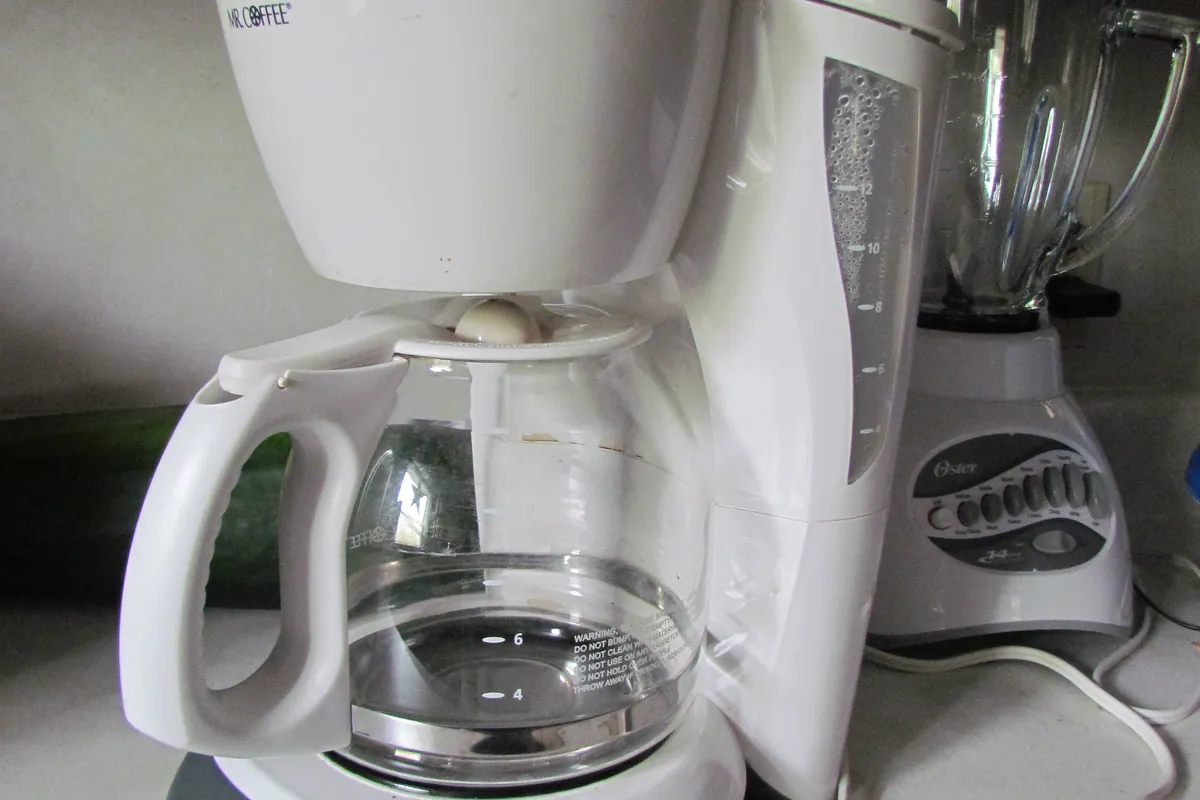
A brown spill near the basket usually sends the investigation toward grounds, filter seating or drainage. Clear water is not enough to diagnose a tank fault: a spill can run down the outside of the housing. Photograph the dry starting location and the first wet area you already observed, not just the final puddle.
What to tell support
Record the full model, whether the tank leaks while detached, whether the liquid is clear or coffee-colored, and whether the problem began after cleaning or moving the machine. These observations are more useful than ordering a universal replacement valve. Do not buy a tank based on the brand name alone.
Use the matching manufacturer illustrations
The source links below identify the relevant manual or support page. No verified exact-model hands-on repair video is claimed on this page. Use the written decision list without imitating a different machine.
Open model-specific referencesStop and obtain help when
Any underside leak, wet cord, tripped outlet, cracked carafe, steam escaping a housing joint or unexplained recurrence means stop and arrange service. A drying period does not prove electrical safety.
Questions this diagnosis does not skip
Should I descale a leaking Ninja?
Not as a diagnostic experiment. Descaling does not establish where a leak originates. Resolve the location and safety question first.
Is every reservoir drip a fault?
No. The CFP300 guide distinguishes residual water at the removed tank valve from a base leak. Repeated loss from a detached tank still warrants inspection.
References and evidence
- SharkNinja CFP300 series owner guide (manufacturer-authored PDF, mirrored copy)Applies to CFP300, CFP301, CFP305 and CFP355A; features vary. Original manufacturer document, not the mirror site's FAQ. See printed pages 12-23.
- Ninja official CFP300-series manual directoryOfficial directory identified in search; direct fetch was unavailable during this audit. Check current revision here.
Manufacturer facts and procedures are referenced above; the observation comparisons are our diagnostic synthesis, not proof of a failed component. Photos are illustrative, not evidence of hands-on testing. Editorial standards | Report a correction.