
Quick diagnosis
Taste the source water, then a cooled water-only brew. Wash permitted removable parts with mild unscented soap and run several fresh-water cycles. If plain water picks up a burning-plastic odor while the machine heats, stop using it.
What this symptom usually means
Plastic, stale, bitter, or chemical taste can come from manufacturing residue, old coffee oils, water, an incorrect cleaning product, or overheated coffee on a warming plate. Isolate the machine by tasting fresh water before and after a water-only cycle.
Model-specific context: New-plastic odor should diminish with washing and rinsing. A hot electrical or melting smell is not a normal break-in condition.
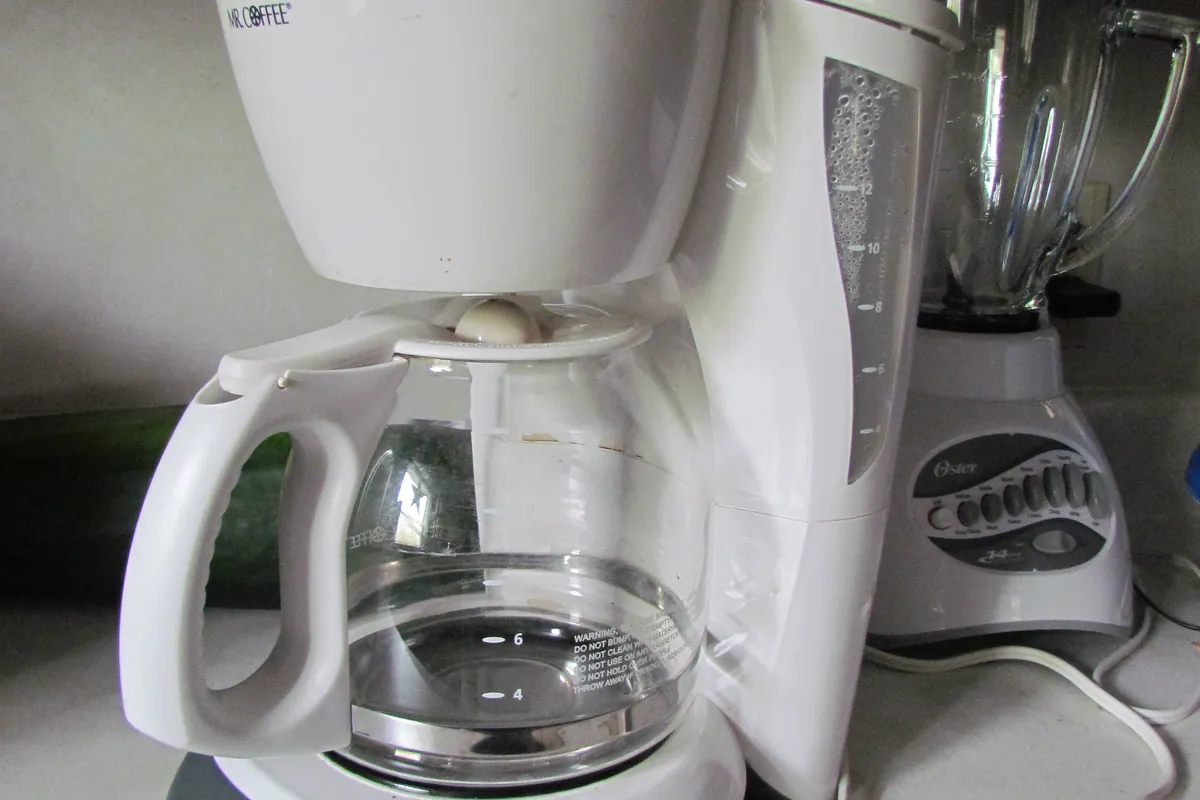
Clues to record before touching the machine
The fastest diagnosis comes from recording the machine's state before it is changed. Use your phone for a short video and write down whether the symptom occurs at startup, while heating, during grinding, after the pump starts, or during shutdown.
- Odor is strongest in the reservoir
- Taste began after cleaner use
- Smell increases near the hot plate
- Taste the source water cold
- Run a plain water cycle and let it cool
Most likely causes, in diagnostic order
The list below is ordered from common and externally testable conditions toward causes that may need qualified service. It is not a replacement for the error table or safety instructions for your exact model.
- Manufacturing residue on removable parts
- Cleaner was not rinsed
- Plastic is overheating
- New removable parts retain manufacturing odor
- Coffee oils are stale
- Cleaning solution was not fully rinsed
- Water source contributes taste
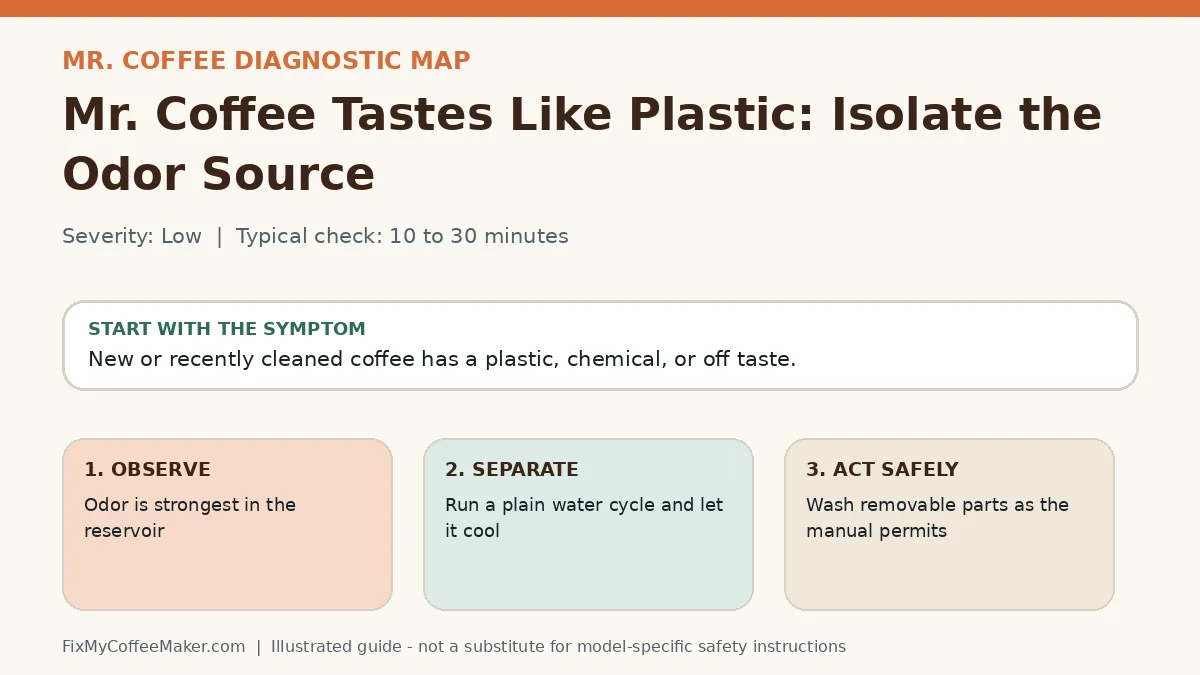
Owner-level observations and checks
Do not begin by replacing parts or repeating the full maintenance cycle. Complete these checks in order and stop if the machine behaves abnormally.
- Taste the source water cold
- Run a plain water cycle and let it cool
- Smell removable tank, lid, and basket separately
- Use fresh coffee after cleaning
Illustrated video walkthrough
Original 8-second silent, captioned diagnostic animation. It is an illustrated decision guide, not footage of this exact machine.
Safe fixes, easiest first
- Wash removable parts as the manual permits
- Run multiple full fresh-water rinses
- Clean coffee-oil residue
- Try filtered water
- Avoid fragranced cleaners or vinegar unless explicitly approved
- Replace damaged or odor-retaining removable parts
How to interpret what happens next
Water tastes normal but coffee does not: beans, grind, oils, or warming time are involved
Water picks up odor in the tank: clean or replace the removable part
Chemical taste follows descaling: more fresh-water rinsing is needed
Burnt taste develops on the hot plate: reduce hold time
Common misdiagnosis
Masking odor with flavored coffee does not remove residue and makes diagnosis harder. Test with plain water first.
When to stop troubleshooting
Owner-level checks end when the next step would expose wiring, a heater, pressurized plumbing, sharp internal parts, or a sealed grinder. Stop and contact the manufacturer or a qualified appliance technician when any of these apply:
- Odor resembles burning plastic or wiring
- Plastic is warped
- Cleaner not intended for food equipment was used
- Symptoms include smoke or overheating
Prevent the problem from returning
- Rinse new parts before use
- Do not leave coffee oils for weeks
- Use only approved cleaning products
Sources and verification
This page paraphrases owner-level manufacturer guidance and adds an original symptom-first decision path. It does not reproduce a manual. Exact button sequences should always be checked against the model label and current official instructions.
- Mr. Coffee support - official manufacturer information used to verify model terminology and owner-level procedures.
Editorial status: desk-researched against official support material; diagnostic media are original illustrations. We do not claim hands-on testing of this exact machine. See our evidence labels and report a correction.